Female Boss, Male Victim. A Workplace Harassment Case JPMorgan
Workplace harassment case reveals power misuse and gender bias issues.

Workplace harassment case reveals power misuse and gender bias issues.
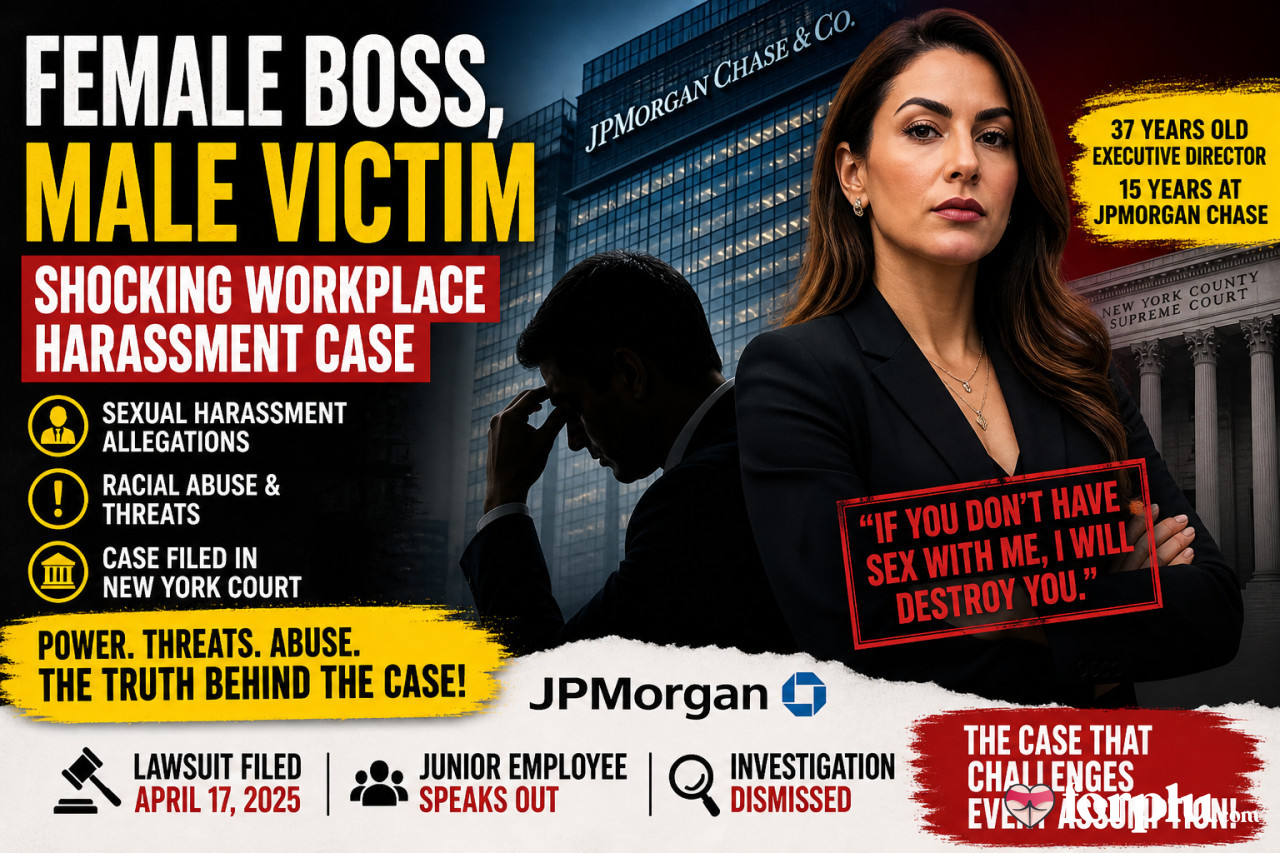
Most people link workplace harassment with male offenders and female victims. This case breaks that pattern. It shows how power, not gender, drives abuse.
A recent lawsuit filed in New York has drawn attention. A junior employee accused his senior, a female executive, of harassment, threats, and racial abuse. The case involves JPMorgan Chase, one of the largest banks in the world.
This article explains what happened, why it matters, and what lessons you should take from it.
On April 17, a lawsuit was filed in the New York County Supreme Court. The complaint came from a junior employee, identified as “John Doe” in legal records.
He accused his boss, Lorna Hesdani, an executive director in the leveraged finance division, of:
The accused has denied all claims. The case is still under review.
Timeline of Allegations
Early 2024
The two began working together around March to May 2024.
According to the complaint:
The employee ignored these actions.
Escalation Phase
After rejection, the tone changed.
The complaint states:
September 2024 Incident
A more serious allegation appeared:
Another claim includes:
The employee reported emotional breakdown during this incident.
During one of the encounters, the lawsuit Hajdini showed up at the victim's apartment and made sexual advances. She removed her shirt, began fondling her breasts and racially insulted Doe's wife, stating, "I bet your little Asian, fish head, wife doesn't have these cannons."
She allegedly forcibly removed Doe's pants and performed oral sex on him against his will. The victim began to cry, but Hajdini scolded him for failing to achieve an erection.
"Stop f**king crying. You think anyone would ever believe you? You're a f**king douche bag who thinks he's hot s**t, but you can't even get your d**k hard for me? What the f**k is this?" she allegedly said.
In May 2025:
Company Response:
Current Status:
Lorna Hesdani
She holds a strong position in corporate finance.
The victim’s lawyer, Daniel Kasher, stated:
Most discussions focus on female victims. This case shows:
Data Insight:
A 2023 workplace survey found that nearly 20 percent of male employees reported some form of harassment, but most did not file complaints.
The issue centers on authority misuse.
When a senior employee controls:
Abuse becomes easier.
The complaint includes racial remarks.
This adds another layer:
The company conducted an internal investigation.
Outcome:
This raises questions:
This case follows known patterns:
Understanding these patterns helps early detection.
If you face similar situations:
Silence often strengthens the abuser.
Organizations need stronger systems:
Weak systems damage trust.
Courts evaluate:
Until judgment:
This case challenges common beliefs about workplace harassment. It highlights a simple truth. Abuse depends on power, not gender.
The final decision will come from the court. Until then, the case raises critical questions about fairness, corporate systems, and employee safety.
For more such deep insights and real-world case breakdowns, visit sociallykeeda.com. Stay informed.